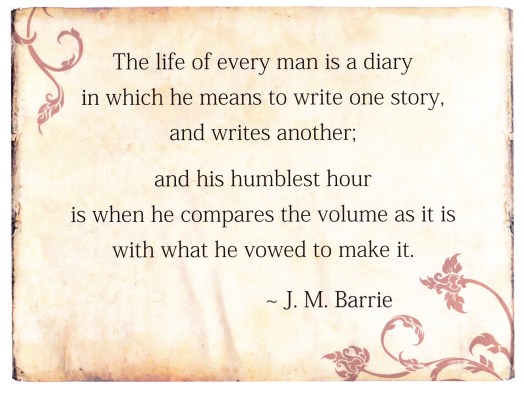
his humblest hour
Feb 21
Feb 17
I’m a pharmacy scheduler for a drug store chain, and it’s my responsibility to make sure pharmacist’s vacations and requests off are covered in my district, including sick days and other call-outs. I knew the snow we got last Wednesday night was going to be an issue on Thursday, so when I got the first call at 7 am, I was nice but pretty much said, “the store has to open, so you need to try to get there.” Luckily, her pharmacy partner had a 4-wheel drive, and she went in instead with no problem.
But as the day wore on, more calls and complaints came in, including questions like, “I had a hard time getting in today, how do I call out next time?”
You don’t! You had a week’s notice that this snow was coming! You could have gotten a room in town last night. You’re a pharmacist, and you make a lot of money, in part because of your expertise and in part because you are essential personnel. The pharmacy can’t legally open without you – there will be customers who need your help today. You should have planned better.
It’s stressful for me when I get call-outs I know I can’t cover, and I got a little more irritated with each situation. More than once I found myself saying to my boss or to a pharmacist whose partner didn’t show up, “If I knew I had to be at work today, I would have been there.”
And it’s true. I have driven to work in the snow, and left in the snow. Sleet, rain, ice? No problem. I’ve worked through tropical storms and even a hurricane once (in a Virginia gets side-swiped kind of way, but it was still scary). I’ve never missed a day at this job because of weather.
Until Friday.
I figured I’d be okay to get out of the driveway by 1 or so on Friday afternoon, which would have been fine. And failing that, I didn’t really need to get out until Saturday afternoon when I had to babysit, and I could stop at a store and do the payroll then.
But an 11 am conference call was sprung on me, and I’d need to be on my work computer to take it. I should have just said “I can’t make that,” but after all my big talk, I felt like I had to. I said I’d be at work if I had to be, no matter what the weather conditions. So I had to back that up with effort.
And shortness of breath. And sore arms. And back pain.
After two snowfalls, each followed by freezing rain, I had a driveway full of deep, crusty snow to get over. And my driveway is long. It was just too deep for my undercarriage, and the crust so thick and unyielding that I couldn’t push through.
So I shoveled. And shoveled.
Damn my big mouth. “If I had to be at work today, I’d make it in no matter what.”
Man I wished I could suck back a lotta words on Friday.
If I had it to do differently, I’d have parked at the bottom of the driveway on Wednesday night.
Oh yeah, and I wouldn’t have been so holier-than-thou. 🙂
Knowing that I didn’t have to work on Thursday (or even Friday if I couldn’t get out) made it really easy for me to be judgy about those pharmacists who didn’t plan ahead themselves. Even if they thought in the back of their minds that they’d just get a free snow day, that’s no excuse for me to act so superior.
Irony: When I came in the house to get on the call (humbly, with the expectation of a “weather isn’t an excuse” talking down for not making it in to the office) there wasn’t anyone on it. The call had been cancelled.
♦
Have you ever regretted some big talk?
.
Feb 10
I looked at the clock and thought, “11:17!! Already? I haven’t gotten anything done today!”
But when I tried to pick out just what it was I thought I should have done already, my mind was a blank. The idea of what I hadn’t accomplished was just a kind of hazy cloud, an overcast. Ill defined and vaporous, yet substantial enough to cast a shadow across my mind.
All this as I dried my hands from washing dishes. Hmm.
So I asked myself, “what have I done today?” I clicked them off in my head:
washed a load of clothes
cooked 2 pounds of bacon
made 2 pitchers of tea
emptied the dishwasher
took a conference call for work
texted back and forth with my boss
read my emails
cleaned the kitchen
made breakfast
hand washed a bunch of dishes
cleaned the kitty litter…
I guess I did do some things. And yet I had stood there, downcast and self-condemning, in the shadow of a cloud of my own making.
Why do we do that to ourselves? I know it’s not just me.
Why are we so hard on ourselves?
.
When I was writing about her for the MQM post, I kept going down all these rabbit trails of questions and thoughts. So, I finally tore it all apart and just posted the simple version. But I didn’t want to scrap the rest, so I’m posting it here.
Her filled me with questions and observations. But what resonated most for me is a question Samantha asked, “How do you share your life with somebody?“
In a non-science-fiction world, Theodore and Samantha’s relationship resembles a long-distance couple who have no hope of ever meeting in person. But is that really sharing your life with another person? Or is it just sharing the abbreviated notes and emotions of two lives lived separately?
What does real intimacy look like?
Theodore and Samantha’s relationship is entirely emotional, with no physical intimacy. Samantha was very real to me, but I found myself picturing Scarlett Johansson when Samantha spoke. I craved to see the expressions on her face, even though I could imagine them all well enough from the emotions I heard in her voice. Director Spike Jonze created an intimate connection between Theodore and the audience through the use of facial close-ups and torso shots, but we had none of that with Samantha. Close your eyes and think of someone you love. What do you see? In the end, I felt a loss over never seeing Samantha’s face or being able to look in her eyes.
Can you maintain a relationship with someone who will never be physically present? Is that a real relationship at all? For me, this is not about a physically functioning body, but about being there. Being present, showing up. Being able to look in each others eyes, whether you’re laughing or arguing. Not being able to check out with the click of an off button.
In the relationship of Theodore’s friend Amy and her husband, we witness physical intimacy without a great deal of emotional support. Almost from the moment you meet them, you get the sense of this separateness. They live together and have the benefit of a physical intimacy that Theodore and Samantha can never have. They get to look in one another’s eyes when they laugh or fight or cry. And yet they don’t click with each other’s personal passions, either finding fault or simply not “getting it”.
But is being present, being physically accessible, in the same city, house, room, more important than being fully present emotionally, listening to one another, communicating well with one another? Is being there in a physical sense enough to maintain a relationship if the emotional component is lacking?
Is intimacy about communication or cohabitation? Does sharing your life with someone mean being fully present emotionally or physically?
When Theodore’s ex-wife finds out that he’s dating an OS, she exclaims: “You always wanted to have a wife without the challenges of actually dealing with anything real.” And as much as Theodore considers Samantha real, as much as he loves her, this statement throws him into a tailspin. He wonders to his friend if he’s even capable of a “real relationship”, to which she asks, ‘is your relationship with Samantha not real?’
What constitutes a real relationship?
Before he starts seeing Samantha, Theodore meets a girl who basically says she wants to date him. But he can’t or won’t commit to even the prospect of future dates. I can understand how having that physical person in front of him, and thinking about adding a person to his life, might be daunting for Theodore. This is someone who’s going to make demands on your time, someone you’re going to have to accommodate. You’ll have to incorporate their friends and family and routines into your life. It’s a whole big deal. It’s serious business to bring a person into your life.
But there’s an additional piece to that for people who are less social. When Theodore is first setting up his new OS, the computer asks him if he’s social or antisocial, and Theodore doesn’t quite know how to answer that. I’m like that. I’m social in that I need people, and I genuinely enjoy people. I’m antisocial in the sense that I don’t want all the trouble that comes with incorporating more people into my life in a physical way. That idea fills me with anxiety. So there’s an attractive aspect to a non-entity relationship. Cyber relationships, long distance relationships, voice relationships…those are appealing in their way.
But is there something wrong with preferring to add non-present relationships, as opposed to inviting new people into your physical life? Is Theodore – am I – emotionally stunted in some way? That’s what Theodore was asking himself, and doubting about his relationship with Samantha, when his wife reacted the way she did. She was saying that something was wrong with Theodore since all he could handle was non-physically-present relationships. It made him wonder, “what’s wrong with me that I can’t handle a relationship in real life? Am I not giving all of myself?”
Like Theodore, what her made me wonder is if those non-present relationships are real relationships at all. I have many great cyber relationships, whether from blogging, Facebook or Twitter. My job requires me to speak by phone with dozens of people every week, and many of those people feel like friends, even though our relationship only consists of these phone conversations. Are these relationships less valid because they don’t happen face to face, or in some cases even in real time? The truth is that those relationships are easier to maintain because of their limitations. They don’t have any of the extra “physically showing up” requirements of an in-person relationship. In a cyber friendship, you can take days to answer someone; it’s not even rude. After all, the other person knows you’re just busy leading your real life.
It takes less effort to maintain cyber relationships, but does that equate to less intimacy?
I guess what I’m really asking is am I truly friends with all the people I think I’m friends with? Are you and I real friends? Even though we may never meet in person, I may never hear your voice or even see what some of you look like? Is this real life too?
To answer my own questions, I say yes and yes. Yes, these friendships are real, and yes they lack the intimacy of an in-person relationship.
But that’s okay too, right?
.


I'm a writer and photographer, sometime poet and philosopher, who is figuring out who she was meant to be.
 Me Robo El Show (Instrumental Jazz Mix) by Jeris is licensed under a Attribution Noncommercial (3.0).


 steadily skipping stones