
Is Cyber Friendship Real?
When I was writing about her for the MQM post, I kept going down all these rabbit trails of questions and thoughts. So, I finally tore it all apart and just posted the simple version. But I didn’t want to scrap the rest, so I’m posting it here.
Her filled me with questions and observations. But what resonated most for me is a question Samantha asked, “How do you share your life with somebody?“
In a non-science-fiction world, Theodore and Samantha’s relationship resembles a long-distance couple who have no hope of ever meeting in person. But is that really sharing your life with another person? Or is it just sharing the abbreviated notes and emotions of two lives lived separately?
What does real intimacy look like?
Theodore and Samantha’s relationship is entirely emotional, with no physical intimacy. Samantha was very real to me, but I found myself picturing Scarlett Johansson when Samantha spoke. I craved to see the expressions on her face, even though I could imagine them all well enough from the emotions I heard in her voice. Director Spike Jonze created an intimate connection between Theodore and the audience through the use of facial close-ups and torso shots, but we had none of that with Samantha. Close your eyes and think of someone you love. What do you see? In the end, I felt a loss over never seeing Samantha’s face or being able to look in her eyes.
Can you maintain a relationship with someone who will never be physically present? Is that a real relationship at all? For me, this is not about a physically functioning body, but about being there. Being present, showing up. Being able to look in each others eyes, whether you’re laughing or arguing. Not being able to check out with the click of an off button.
In the relationship of Theodore’s friend Amy and her husband, we witness physical intimacy without a great deal of emotional support. Almost from the moment you meet them, you get the sense of this separateness. They live together and have the benefit of a physical intimacy that Theodore and Samantha can never have. They get to look in one another’s eyes when they laugh or fight or cry. And yet they don’t click with each other’s personal passions, either finding fault or simply not “getting it”.
But is being present, being physically accessible, in the same city, house, room, more important than being fully present emotionally, listening to one another, communicating well with one another? Is being there in a physical sense enough to maintain a relationship if the emotional component is lacking?
Is intimacy about communication or cohabitation? Does sharing your life with someone mean being fully present emotionally or physically?
When Theodore’s ex-wife finds out that he’s dating an OS, she exclaims: “You always wanted to have a wife without the challenges of actually dealing with anything real.” And as much as Theodore considers Samantha real, as much as he loves her, this statement throws him into a tailspin. He wonders to his friend if he’s even capable of a “real relationship”, to which she asks, ‘is your relationship with Samantha not real?’
What constitutes a real relationship?
Before he starts seeing Samantha, Theodore meets a girl who basically says she wants to date him. But he can’t or won’t commit to even the prospect of future dates. I can understand how having that physical person in front of him, and thinking about adding a person to his life, might be daunting for Theodore. This is someone who’s going to make demands on your time, someone you’re going to have to accommodate. You’ll have to incorporate their friends and family and routines into your life. It’s a whole big deal. It’s serious business to bring a person into your life.
But there’s an additional piece to that for people who are less social. When Theodore is first setting up his new OS, the computer asks him if he’s social or antisocial, and Theodore doesn’t quite know how to answer that. I’m like that. I’m social in that I need people, and I genuinely enjoy people. I’m antisocial in the sense that I don’t want all the trouble that comes with incorporating more people into my life in a physical way. That idea fills me with anxiety. So there’s an attractive aspect to a non-entity relationship. Cyber relationships, long distance relationships, voice relationships…those are appealing in their way.
But is there something wrong with preferring to add non-present relationships, as opposed to inviting new people into your physical life? Is Theodore – am I – emotionally stunted in some way? That’s what Theodore was asking himself, and doubting about his relationship with Samantha, when his wife reacted the way she did. She was saying that something was wrong with Theodore since all he could handle was non-physically-present relationships. It made him wonder, “what’s wrong with me that I can’t handle a relationship in real life? Am I not giving all of myself?”
Like Theodore, what her made me wonder is if those non-present relationships are real relationships at all. I have many great cyber relationships, whether from blogging, Facebook or Twitter. My job requires me to speak by phone with dozens of people every week, and many of those people feel like friends, even though our relationship only consists of these phone conversations. Are these relationships less valid because they don’t happen face to face, or in some cases even in real time? The truth is that those relationships are easier to maintain because of their limitations. They don’t have any of the extra “physically showing up” requirements of an in-person relationship. In a cyber friendship, you can take days to answer someone; it’s not even rude. After all, the other person knows you’re just busy leading your real life.
It takes less effort to maintain cyber relationships, but does that equate to less intimacy?
I guess what I’m really asking is am I truly friends with all the people I think I’m friends with? Are you and I real friends? Even though we may never meet in person, I may never hear your voice or even see what some of you look like? Is this real life too?
To answer my own questions, I say yes and yes. Yes, these friendships are real, and yes they lack the intimacy of an in-person relationship.
But that’s okay too, right?
.
 US President from ’81-’89. During the eight years of his presidency, he reshaped national politics and carried out his campaign promises to cut taxes and increase the defense budget, using the latter as leverage to negotiate significant arms control agreements with the Soviet Union. Despite some setbacks, including notable budget deficits, Reagan left office in 1989 with strong approval ratings.
  The general secretary of the Communist Party of the Soviet Union from 1985 to 1991 and president of the Soviet Union in 1990–91. His efforts to democratize his country’s political system and decentralize its economy led to the downfall of communism and the breakup of the Soviet Union in 1991. In part because he ended the Soviet Union’s postwar domination of eastern Europe, Gorbachev was awarded the Nobel Prize for Peace in 1990.
  In 1979, Thatcher was elected British Prime Minister, the first and only woman to hold that position, and the longest-serving Prime Minister of the 20th century. Called the “Iron Lady” by a Soviet journalist, that nickname became associated with her leadership style and politics. During her three terms, from 1979 to 1990, Thatcher worked to cut welfare programs, reduce trade union power and influence, and privatize state-owned companies. The policies she implemented have become known as
  In 1981, Ronald Reagan nominated O’Connor as a justice of the U.S. Supreme Court and she received unanimous Senate approval. O’Connor made history as the first woman justice to serve on the Supreme Court. As a justice, O’Connor was a key swing vote in many important cases, including the upholding of Roe v. Wade. She often focused on the letter of law, not the clamoring of politicians, and voted for what she believed best fit the intentions of the U.S. Constitution. She retired in 2006, after serving for 24 years.
  In 1975, Gates co-founded Microsoft. In 1980, he partnered with IBM, adapting an operating system (86-DOS) for their new personal computer. Microsoft retained the copyright for the operating system, and went on to become a major name in the computer industry with sales of MS-DOS, which was released in 1982. Microsoft Windows was launched in 1985, which went on to become an industry standard. “His Microsoft software shaped the way millions use the technology that has transformed communications and commerce.” – USA Today
 Yamauchi transformed his grandfather’s playing card company into one of the world’s most recognizable brands
 Cosmologist Stephen Hawking is regarded as one of the most brilliant theoretical physicists since Albert Einstein. His work on the origins and structure of the universe, from the Big Bang to black holes, has revolutionized the field, while his best-selling books have appealed to readers who may not have Hawking’s scientific background. His first book,”A Brief History of Time,” was published in 1988 and became an international best seller.
  Ryan White and his mom courageously fought AIDS-related discrimination and helped educate the Nation about his disease. Diagnosed with AIDS at age 13, he and his mother fought for his right to attend school, gaining international attention as a voice of reason about HIV/AIDS. At the age of 18, Ryan died just months before Congress passed the AIDS bill that bears his name – the Ryan White CARE (Comprehensive AIDS Resources Emergency) Act, now called the Ryan White HIV/AIDS Program.
 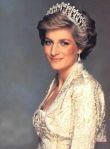 Princess Diana, the wife of British Prince Charles, endeared herself to the public through her warmth and caring. From her picture-perfect wedding to her untimely death in a car accident, Princess Diana was in the spotlight nearly at all times. Despite problems with so much attention, Princess Diana tried to use this publicity to bring attention to worthy causes such as the elimination of AIDS and landmines. She also became truly a princess of the people when she publicly shared her struggles with depression and bulimia, becoming a role model for those who suffer from those ailments.
  Considered by many as the greatest hockey player of all time, “The Great One” helped the NHL gain popularity in the US. At the end of his 1980 rookie year, he was MVP and tied for first in scoring. By the end of his second year, he had broken two major records, for points and assists in a season. Gretzky has won or shares 61 NHL records (one of his records is for breaking the most records). In his first nine years in major league hockey, he won eight consecutive MVP’s, four Stanley Cups and seven Art Ross Trophies (award for most points). His #99 jersey has been retired by every NHL team.
 By acclamation, Michael Jordan is the greatest basketball player of all time. As a phenomenal athlete with a unique combination of fundamental soundness, grace, speed, power, artistry, improvisational ability and an unquenchable competitive desire, Jordan single-handedly redefined the NBA superstar. A listing of his top accomplishments include: Rookie of the Year, Five-time NBA MVP, Six-time NBA champion, Six-time NBA Finals MVP, Defensive Player of the Year, 14-time NBA All-Star, Three-time NBA All-Star MVP, Ten scoring titles (an NBA record), Retired with the NBA’s highest scoring average, Hall of Fame inductee.
  At approx. 65 million copies sold, “The King of Pop’s” 1982 Thriller remains the best-selling album of all time worldwide. The 14 minute music video was so popular that MTV played it twice an hour to meet demand. Jackson had nine #1 singles throughout the 80’s, more than any other musician, and was inducted into the Rock and Roll Hall of Fame twice. He is only person from pop and rock music to ever be inducted into the Dance Hall of Fame. Jackson has 13 Grammy Awards, the Grammy Legend Award, Grammy Lifetime Achievement Award, and 26 American Music Awards (more than any other artist), including “Artist of the Century” and “Artist of the 1980’s”. Jackson is the most awarded recording artist in the history of popular music, and posthumously became the most downloaded artist of all time.
 Madonna is known for continuously reinventing both her music and image, and for retaining a standard of autonomy within the recording industry. She attained immense popularity by pushing the boundaries of lyrical content in mainstream pop music and imagery in her videos, which became a fixture on MTV. Critics have praised her diverse musical productions which have also been known to induce controversy. Her music and style has influenced numerous artists around the world. Madonna is considered by Forbes as a cultural icon and she is often referred to by the international media as the “Queen of Pop”.
  Russell Simmons is the most important businessman in the history of rap music. As co-founder of the Def Jam label in 1984, his street-friendly taste and marketing savvy helped bring hip-hop into the mainstream of American culture and mass media. Simmons ensured his artists remained as uncompromisingly rebellious as possible, an attitude that made hip-hop a music of choice for a generation of multi-cultural teenagers simply by staying true to its roots. Simmons shepherded rap music into big business, gradually building his own communications company into the largest black-owned enterprise in the industry.
  In the ’80s, this director was basically an unstoppable blockbuster machine. Virtually everything he made was huge — all three Indiana Jones films, E.T., Back to the Future I and II, Gremlins, Poltergeist, The Goonies — and he perfected the difficult mix between family accessible adventure and enormously successful moneymakers. He’s inarguably one of the most influential people in film, and from Raiders of the Lost Ark onward, all his work in the ’80s became pop culture gold.
  In 1985, Goldberg won a Grammy for skits taken from her one-woman show, which addressed the issue of race in America. She also starred in The Color Purple, for which she received an Oscar nomination and her first Golden Globe Award. She won her second Golden Globe for her role in 1990’s Ghost, and became the first African-American actress to win the Academy Award for best supporting actress since 1940 (and only the second to win an Oscar for acting). That same year, the NAACP named her the Black Entertainer of the Year, and she also collected an Excellence Award at the Women in Film Festival.
  Thomas Cruise Mapother IV always thought he would be a priest. But he ditched that idea in high school, and focused on becoming an actor. He made his 1981 début in Endless Love, and quickly shot to stardom. Within five years, Tom became the highest grossing actor in the market, starring in hits like Top Gun, Risky Business, and Rain Man. Tom became a big supporter of The Church Of Scientology in 1990, claiming that the teachings cured him of the dyslexia that he’d had all of his life.
  In 1984, Oprah moved to Chicago to host a faltering half-hour morning program, which she turned into the hottest show in town. In 1986, it was broadcast nationally, and quickly became the number one talk show. In 1987, it received three Daytime Emmy Awards, and in 1988, Oprah herself received the International Radio and Television Society’s “Broadcaster of the Year” Award; the youngest person ever to receive the honor.




 steadily skipping stones